Jerusalem Synagogue
SUNDAY–FRIDAY
10:00 AM–6:00 PM
SATURDAYS AND JEWISH HOLIDAYS
CLOSED
11.9. CLOSING TIME17:00
12.9. CLOSED
13.9. CLOSED
20.9. CLOSING TIME 17:00
21.9. CLOSED
25.9. CLOSING TIME 16:45
26.9. CLOSED
27.9. CLOSED
2.10. CLOSING TIME 16:30
3.10. CLOSED
4.10. CLOSED
on-line
Jeruzalémská 7
Prague 1
|
Adults |
150 CZK |
|
Children under 6 |
free |
|
Children under 15 and |
100 CZK |
Reduced entrance fee for visitors with valid ticket to the Jewish Town sites:
|
Adults |
100 CZK |
|
Children under 6 |
free |
|
Children under 15 and |
80 CZK |
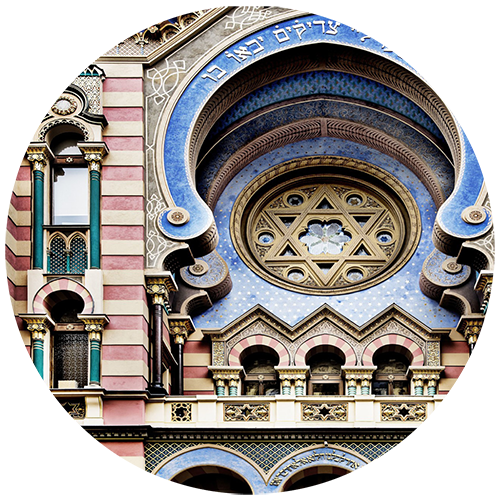
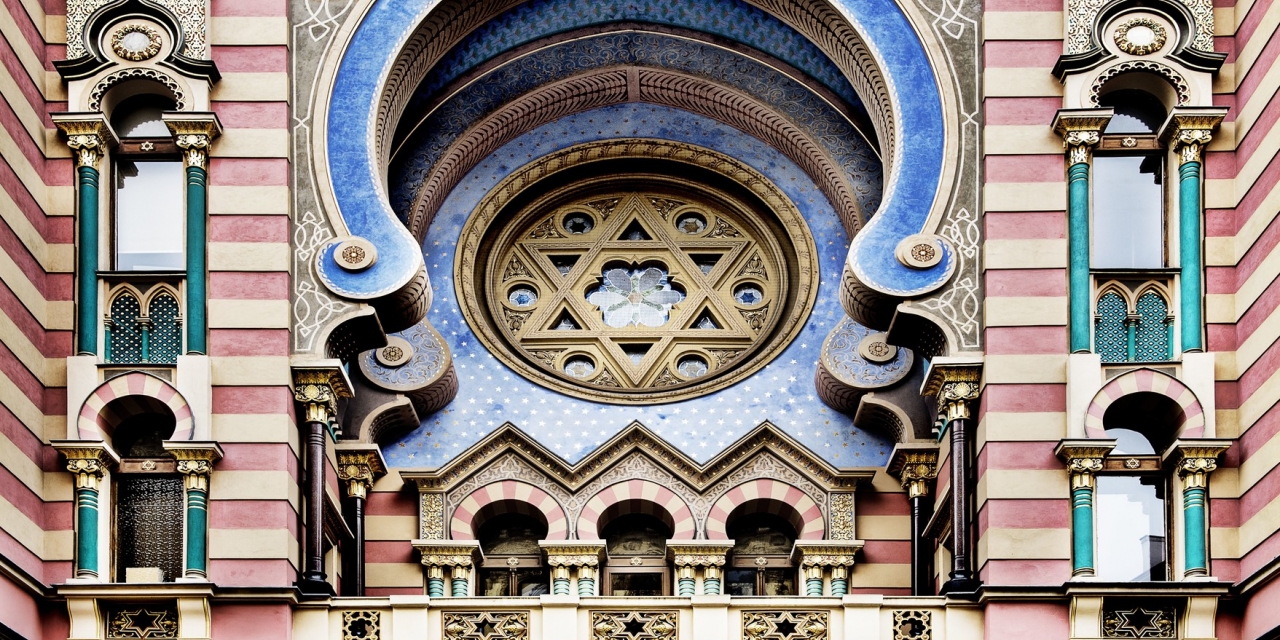
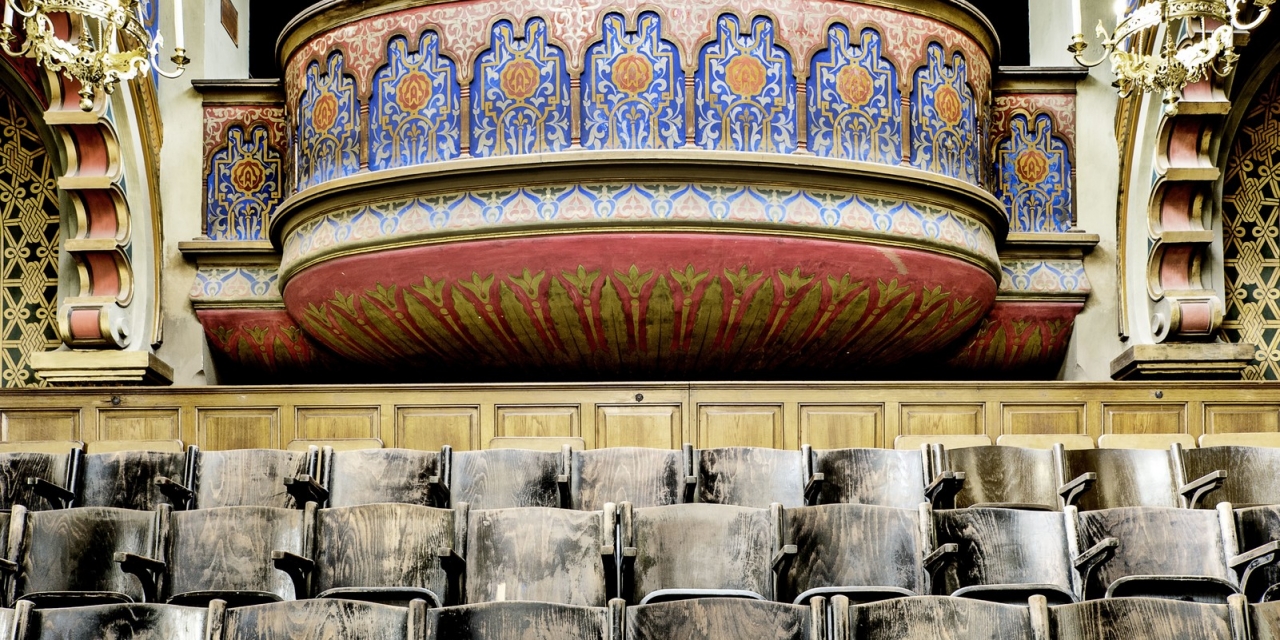
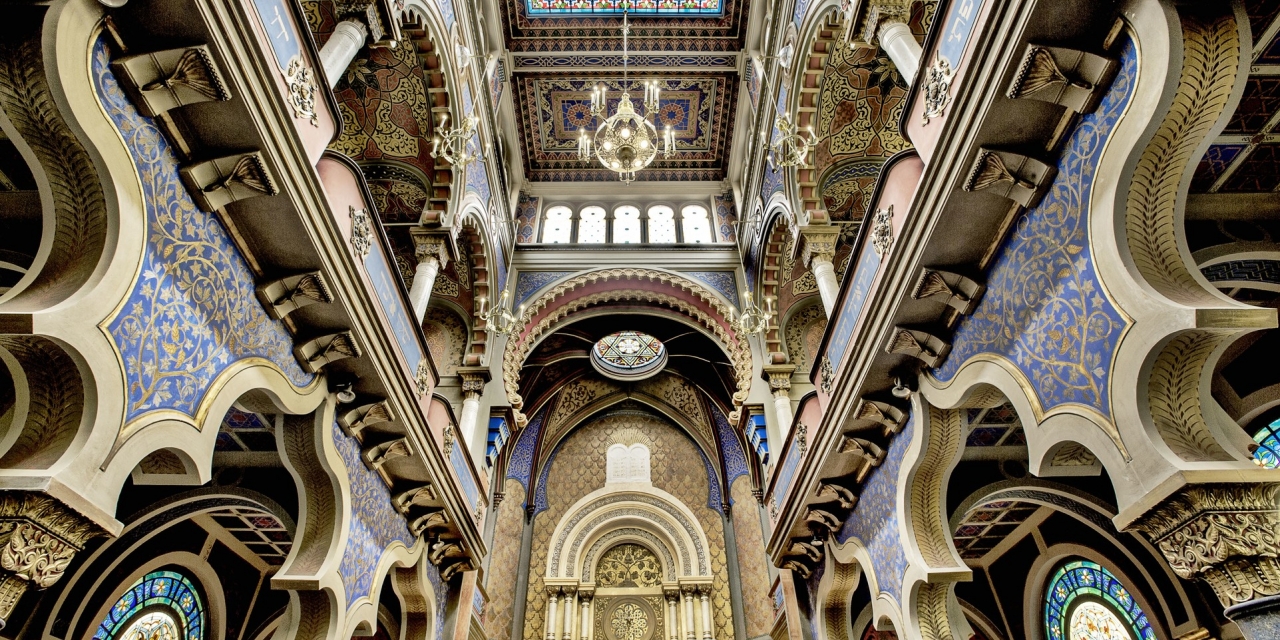
The synagogue was built between 1905–1906 by a Viennese architect and an Imperial construction supervisor Wilhelm Stiassny, as a replacement for three Synagogues (the Zigeiner, the Velkodvorská, and the New) destroyed in the years 1898-1906 during the redevelopment. Although the association which took up the challenge of building the Synagogue was founded in 1896, it took ten years before the Synagogue was inaugurated on 16 September 1906. Initially it bore the name of the Jubilee Temple of Emperor Franz Joseph to commemorate the 50th anniversary of his reign, in 1898. After WWI, the present name, the Jerusalem Synagogue, based on the street name where it stands, slowly gained ground. The street name has nothing to do with the Synagogue, however: the street is named after the Church of Jerusalem former chapel of St Henry, nearby.
The Jerusalem Synagogue is distinctive in that it is one of only eight Synagogues built to W. Stiassny’s design, where services are still held. The only interlude was during the war years 1941–1945, when it acted as a repository of seized Jewish property.
Besides its religious role, the Synagogue is a cultural and exhibition venue. The concerts regularly held here let visitors listen to the uniquely preserved original organ by Emanuel Stephen Peter.
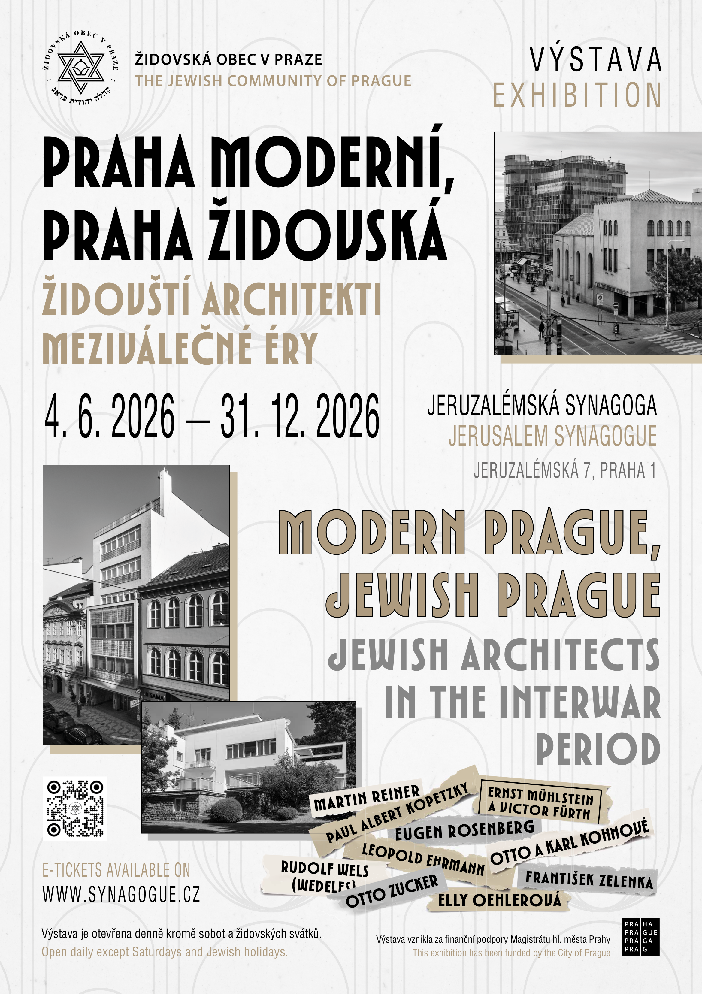
The Jewish Community of Prague has organized a new exhibition at the Jerusalem Synagogue titled “Modern Prague, Jewish Prague / Jewish Architects of the Interwar Era,” which highlights an important yet long-neglected chapter in the history of Czech architecture. The exhibition will be open to the public starting June 4 and will run through the end of 2026.
The exhibition features twelve figures whose professional careers and life stories were profoundly shaped by the dramatic events of the 20th century. Many were forced to emigrate; others perished during Nazi persecution. Those who survived often left the country after 1948. As a result of Nazism and the subsequent communist regime, their work and personal stories were long erased from historical memory.
Visitors will learn about the work of architects Rudolf Wels, Paul Albert Kopetzky, Leopold Ehrmann, the brothers Otto and Karl Kohn, the duo Ernst Mühlstein and Viktor Fürth, Otto Zucker, Martin Reiner, František Zelenka, Ella Oehler, and Eugen Rosenberg. Their work emerged during the First Republic, an era that allowed for free contact with the most significant centers of the European avant-garde, including the Bauhaus, Russian Constructivism, and Le Corbusier’s studio.
The selection of architects and biographical profiles was prepared by architectural historian Zdeněk Lukeš, who has long been dedicated to this subject. The exhibition builds on research initiated by the 2002 project *Splátka dluhu* and contributes to a deeper understanding of the lives and work of architects who have been unjustly overlooked.
The exhibition is not only a tribute to significant figures in modern architecture but also a testament to the cultural diversity of interwar Prague and to the lives of people whose lives were profoundly shaped by the history of the 20th century.